

How to Choose Microscope Slides for Laser and Thermal Slide Printers

Microscope slides play an important role in pathology workflows, supporting both specimen preparation and reliable sample identification. For laboratories using automated slide printers, the choice of glass slides also affects printing quality, label durability, and compatibility with routine laboratory procedures.
Laser and thermal slide printers use different printing technologies, so their compatible slides may have different surface requirements. Other factors, including slide dimensions, marking areas, chemical resistance, and tissue adhesion, also influence purchasing decisions. This guide outlines the key features to evaluate when selecting pathology slides for laser or thermal printing. It also introduces LABSIM’s microscope slides and printing equipment to help laboratories identify suitable products for their existing workflows.
Understand the Key Specifications of Microscope Slides for Pathology
Slide Dimensions and Marking Area
For automated slide printing, dimensional consistency is essential for reliable loading and positioning. Laboratories need to verify the slide's length, width, and thickness against the printer's specified requirements. Even small variations between batches can affect feeding accuracy or cause positioning deviations during automated operation.
The marking area also requires careful evaluation. Its width and position determine how much space is available for patient identifiers, specimen numbers, and machine-readable barcodes. Laboratories using barcode-based tracking need to confirm that the designated area accommodates their actual label format without encroaching on the specimen observation area.
Before purchasing in bulk, it is useful to test slides from different batches in the intended printer and check for smooth feeding, consistent positioning, and sufficient printable space.
Surface Design and Tissue Adhesion
The slide surface serves two distinct functions. The marking area must support clear printing and retain identification information through routine chemical exposure. The specimen area needs to provide suitable tissue adhesion for the laboratory's staining procedures.
For example, adhesive-coated slides are commonly selected for applications where tissue sections need stronger attachment during staining and washing. The appropriate surface depends on the specimen type and preparation protocol.
Colored slides can also support visual classification of specimens or workflows. Laboratories should establish a consistent color-coding system to avoid confusion during sample handling.
Match Microscope Slides with Laser and Thermal Printing Technologies
Laser Microscope Slides for Laser Slide Printers
For laser slide printing, the characteristics of the printable surface directly influence marking quality. Some laser slide printers can print on standard glass slides, while laser-optimized slides with a suitable surface can improve marking definition and readability.
When evaluating laser microscope slides, laboratories should focus on the following aspects:
Marking definition: Printed characters, specimen identifiers, and 1D or 2D barcodes need clearly defined edges. Fine barcode elements must remain distinguishable for reliable scanning.
Surface suitability: The slide's printable area must support the laser technology used by the printer. Laser-optimized slides can improve print clarity, while standard slides may also be suitable for compatible laser systems.
Identification consistency: Printed information should remain uniform across the slide batch, supporting consistent specimen labeling in routine workflows.
Laboratories can refer to the printer manufacturer's validated slide recommendations when selecting consumables. This helps establish the appropriate balance between printing performance and consumable cost.
Thermal Microscope Slides for Thermal Slide Printers
For thermal slide printing, the flatness and surface finish of the printable area are important factors in achieving consistent results. Uneven or rough surfaces can affect print quality, leading to incomplete characters, inconsistent marking, or reduced barcode clarity.
Laboratories evaluating thermal microscope slides should pay particular attention to:
Surface flatness: The designated printing area should provide a smooth, even surface for consistent contact during thermal printing.
Batch consistency: Variations in surface finish between production batches can affect print quality and automatic slide feeding. Consistent slide dimensions and surface characteristics help maintain stable printer operation.
Color and marking area: Colored slides can support specimen classification, while the printable area must provide sufficient space for patient identifiers and machine-readable codes.
Before routine use, laboratories can assess print definition, barcode readability, and slide feeding performance across samples from the same batch.
Evaluate Slide Performance Beyond Printing Compatibility
Chemical Resistance and Print Durability
A slide may produce clear markings during printing but still fail to preserve specimen information after exposure to laboratory chemicals. In histology workflows, slides can come into contact with xylene, alcohol, staining solutions, and other reagents during deparaffinization, staining, and tissue processing.
Laboratories should check whether printed identifiers remain legible after these procedures. Characters should not fade, blur, or peel, and barcodes should remain readable by scanners. This is particularly important for laboratories that rely on printed identifiers to track specimens through multiple preparation and examination stages.
Before adopting a new slide type, test printed slides using the laboratory's actual chemical reagents and staining protocols. Inspect the markings after each major processing stage to identify any loss of print quality.
Tissue Adhesion and Staining Requirements
Printing performance and tissue adhesion are separate considerations. A slide may provide a suitable printing surface but still need to meet the tissue retention requirements of the laboratory's staining procedures.
For routine H&E staining, tissue sections need to remain attached during deparaffinization, rehydration, staining, and washing. Applications such as immunohistochemistry may involve additional treatment steps, making tissue retention an important selection criterion.
Laboratories should evaluate slide adhesion based on specimen type, section characteristics, and staining protocols. Tissue detachment, folding, or loss during preparation can affect the quality of the final slide and may require repeat testing. Testing candidate slides with representative specimens helps confirm that both identification markings and tissue sections remain intact throughout the laboratory process.
LABSIM Microscope Slides and Pathology Slide Printing Solutions
LABSIM Laser and Thermal Microscope Slides
LABSIM offers both laser microscope slides and thermal microscope slides for pathology laboratories using automated slide printing systems. Each type is available in six colors: white, pink, yellow, green, blue, and orange. These options allow laboratories to establish color-coding practices for specimen classification and identification. The glass slides are suitable for mainstream slide printers. Printed information is clear and easy to identify, with resistance to peeling and discoloration. The writing surface can also withstand conventional chemical reagents used in pathology laboratories, helping preserve specimen identification during laboratory procedures.
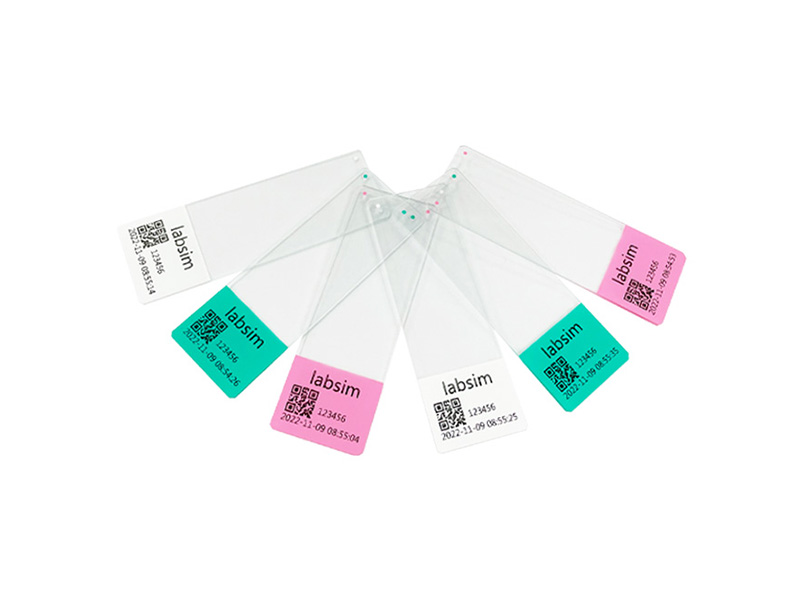
When selecting between the two types, laboratories should match the slide with their printing technology and confirm compatibility with the specific printer model. The availability of both laser and thermal slides gives laboratories options for different slide printing setups.
LABSIM Slide Printers for Different Printing Technologies
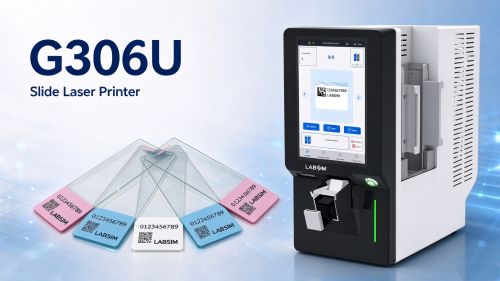
LABSIM's pathology portfolio also includes laser and thermal slide printers designed for automated specimen identification.
The G306U Slide Laser Printer uses UV laser technology and non-contact printing without consumables. It can print characters, symbols, barcodes, and high-resolution QR codes. Its printed information is resistant to xylene and alcohol, supporting the preservation of specimen identifiers during routine pathology procedures.
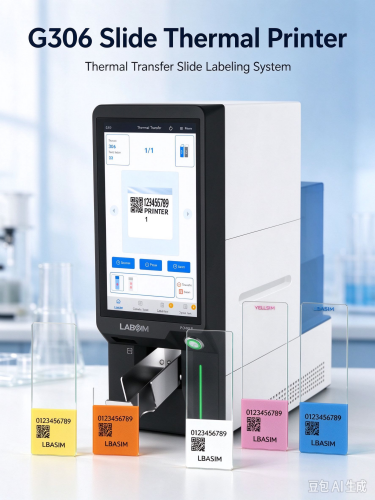
The G306 Slide Thermal Printer uses thermal printing technology to mark characters, letters, symbols, and barcodes. Its printed imprints are also resistant to xylene and alcohol, helping maintain readable identification information during laboratory processing.
These products represent two printing options within LABSIM's pathology portfolio. Laboratories can evaluate the printer technology alongside the corresponding microscope slides, considering print clarity, chemical resistance, and compatibility with their existing specimen identification procedures.
Conclusion
Choosing the right microscope slides for pathology printing requires evaluating several factors, including slide dimensions, printable surface, compatibility with laser or thermal slide printers, chemical resistance, and tissue adhesion. Matching the slides to the printer technology and laboratory staining procedures helps maintain clear specimen identification and reliable performance throughout the pathology workflow.
LABSIM provides laser and thermal microscope slides in six color options, along with slide printers designed for both printing technologies. Explore LABSIM Pathology Products or Request a Quote to find suitable slide printing solutions for your laboratory.
FAQ
1. How Should Microscope Slides Be Stored Before Use?
Microscope slides should be stored in their original packaging in a clean, dry environment. Exposure to moisture, dust, and excessive temperature fluctuations may affect slide cleanliness and handling. Keeping packages sealed until use also helps reduce surface contamination that could interfere with specimen preparation and printing.
2. Can Laboratories Use Different Colored Microscope Slides for Specimen Classification?
Yes. Different slide colors can support visual identification of specimen categories, departments, or testing workflows. Laboratories can establish a standardized color-coding system based on their internal procedures, ensuring that all staff follow the same identification rules. Color selection should also account for visibility and compatibility with existing laboratory labeling practices.
3. What Should Laboratories Consider When Purchasing Microscope Slides in Bulk?
Bulk purchasing decisions should account for monthly slide consumption, packaging quantities, storage capacity, and supplier consistency. Laboratories handling large specimen volumes may benefit from establishing regular purchasing schedules and maintaining appropriate safety stock. Evaluating sample batches before placing larger orders can also help verify product consistency and reduce supply-related disruptions.