

Tissue Cassettes for Laser Cassette Printers: A Selection Guide
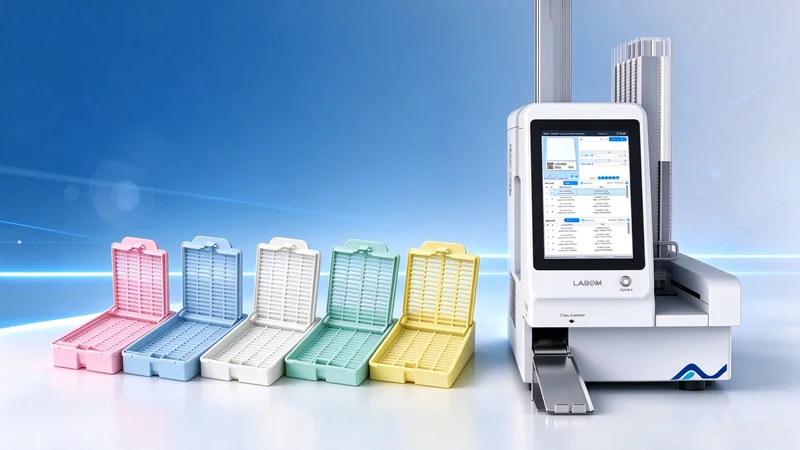
A pathology lab may invest in a laser cassette printer to improve specimen identification, only to find that its existing tissue cassettes are incompatible with the new system. Feeding issues, inconsistent markings, or unreadable barcodes can disrupt routine workflows and create unexpected procurement costs. These challenges often stem from selecting consumables and printing equipment separately without confirming their compatibility. For laboratories planning to upgrade their identification systems or source new supplies, understanding cassette types, material requirements, and printer specifications is essential. This guide explains how to select suitable tissue cassettes for laser printing and evaluate compatible solutions for reliable histology workflows.
Understanding Tissue Cassette
The Role of Tissue Processing Cassettes in Histology
Tissue processing cassettes hold specimens through fixation, dehydration, clearing, and paraffin infiltration. Their perforated structures allow processing reagents to circulate around the tissue while keeping specimens contained and organized for subsequent embedding and sectioning.
Each cassette also serves as a physical identifier throughout the histology workflow. A clearly marked surface helps laboratory personnel match specimens with their corresponding records during processing and handling. Cassette design therefore needs to accommodate both specimen requirements and the laboratory's identification method, including the use of automated printing systems.
Common Tissue Cassette Types and Their Applications
Tissue cassettes are available in different configurations to accommodate specimen sizes, processing procedures, and handling requirements.
- Routine tissue cassettes are designed for everyday histology workflows involving standard tissue specimens.
- Biopsy cassettes accommodate small tissue samples and may feature finer perforations or specialized retention designs to help prevent specimen loss during processing.
- Embedding cassettes support specimen handling through processing and embedding. The term may overlap with tissue processing cassette in commercial product ranges, so buyers should assess the actual design and intended application.
Other variations include cassette dimensions, lid construction, color, and the available marking surface. When selecting a cassette for laser printing, laboratories should consider these functional differences alongside the printer's compatibility requirements.
What Makes a Tissue Cassette Suitable for Laser Printing?
Material and Laser Marking Compatibility
Laser marking depends on how the cassette material responds to the printer's laser energy. A suitable tissue cassette should produce clear, lasting marks without compromising the cassette's intended use in tissue processing. Material composition and surface treatment can influence contrast and marking consistency, so compatibility needs to be assessed for the specific cassette and printer combination. Cassettes intended for thermal printing may not produce the same results in a laser system.
Cassette Dimensions, Geometry, and Feeding Design
Cassette geometry affects both mechanical handling and print positioning. Differences in overall dimensions, lid design, surface angle, or the location of the marking area can prevent a cassette from seating correctly or aligning consistently beneath the laser. In automated systems, even small variations may lead to feeding interruptions or misplaced identifiers. Cassette specifications therefore need to match the printer's supported dimensions and positioning requirements.
Print Quality and Barcode Readability
A successful laser mark must remain legible throughout the specimen identification workflow. Text contrast, character definition, and barcode readability depend on the interaction between the cassette surface, laser parameters, and printed layout. A mark that appears clear immediately after printing may still need to be evaluated after exposure to routine processing reagents and handling. Testing representative cassettes under laboratory conditions helps establish whether identifiers remain readable and barcodes can be scanned reliably at subsequent workflow stages.
How to Verify Tissue Cassette and Printer Compatibility
Check the Printer Model and Approved Cassette Specifications
Compatibility depends on more than cassette size. Material composition, marking surface, lid design, and feeding mechanism all affect whether a tissue cassette works reliably with a particular laser cassette printer. Comparing the printer's specifications with the cassette supplier's technical details helps identify potential mismatches before purchasing.
Validate Printing Performance Before Bulk Purchasing
A trial run can reveal issues that specifications alone may not identify. Laboratories can assess feeding stability, text clarity, barcode readability, and marking durability after routine tissue processing. For workflows involving different cassette designs or colors, each intended type should be evaluated before bulk ordering.
A practical compatibility checklist includes:
- Cassette specifications: Material, dimensions, lid design, and marking surface.
- Printer compatibility: Supported cassette types, feeding requirements, and positioning.
- Printing performance: Text clarity, barcode scanning, and marking consistency.
- Processing durability: Identifier readability after routine reagent exposure and handling.
These checks help laboratories select compatible consumables and reduce the risk of printing interruptions or unreadable specimen identifiers.
Choosing Tissue Cassettes for Different Laboratory Needs
Routine Histology Workflows
For laboratories processing standard biopsy and surgical tissue specimens, conventional tissue processing cassettes are often suitable. Buyers should compare cassette dimensions, perforation patterns, and lid designs against the specimens being handled and the laboratory's processing procedures. For laser printing, the marking area should accommodate the required patient identifiers and barcode without interfering with cassette handling. Standardizing one or two compatible cassette models can also simplify routine purchasing and inventory management.
Biopsy and Specialized Specimens
Laboratories handling small biopsies should prioritize cassette designs that help retain tiny tissue fragments during processing. Finer perforations or mesh-style inserts may be appropriate for certain specimen types, depending on the laboratory's established procedures. Buyers should confirm that the selected design provides adequate reagent circulation while reducing the risk of specimen loss. For laser identification, the cassette must also have a compatible marking surface large enough for the required specimen information.
High-Volume Laboratories
Laboratories processing large numbers of cassettes should prioritize consistent dimensions, reliable feeding, and compatibility with their existing laser cassette printer. Before standardizing a model, buyers should test whether cassettes can be loaded and printed consistently across repeated cycles, and whether barcodes remain scannable after routine processing. Where multiple cassette types are needed, confirming compatibility for each model can help prevent feeding errors and avoid unnecessary variation in consumable inventory.
Why Source Tissue Cassettes and Laser Printers as a Matched Solution?
Sourcing tissue cassettes and laser printers together makes it easier to assess material compatibility, cassette dimensions, feeding performance, and marking quality before purchase. This is particularly useful when setting up a new histology workflow or introducing automated cassette printing, as mismatched consumables can cause feeding interruptions and unclear specimen identifiers.
Working with one supplier for both products can also simplify technical communication and procurement coordination. Laboratories with an existing printer can still source cassettes separately, provided the selected models are confirmed to work with their equipment. The key is a verified cassette-printer combination that supports reliable identification throughout routine tissue processing.
LABSIM Tissue Cassettes and Laser Cassette Printing Solutions
Tissue Cassettes for Different Histology Requirements
LABSIM offers several tissue cassette configurations to accommodate different specimen-handling and identification needs. Its range includes thermal tissue cassettes, laser tissue cassettes, cassettes with covers, and separate-cover designs. Available options also include multiple colors, allowing laboratories to consider color coding when organizing different specimen groups.
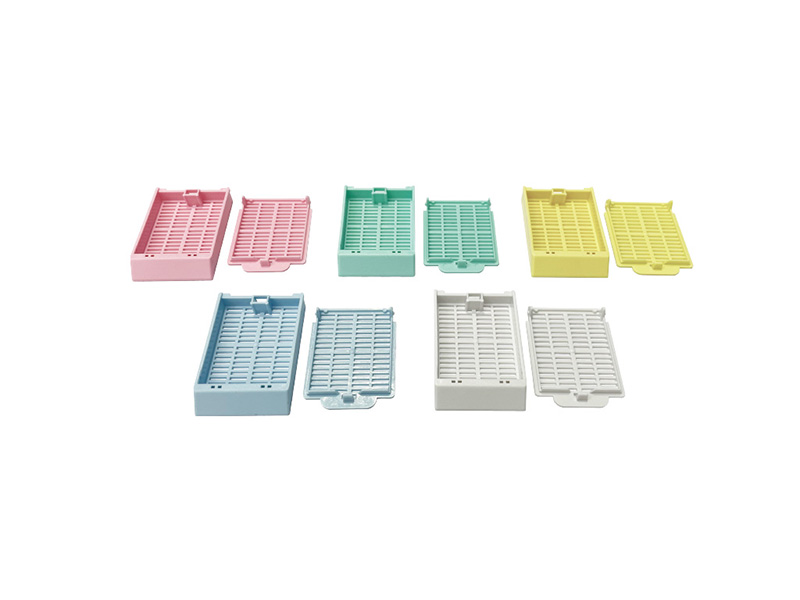
Buyers can compare cassette dimensions, perforation sizes, lid configurations, and color options against their specimen processing procedures and printer specifications. For example, standard laser cassette designs may suit routine histology workflows, while covered or separate-cover configurations can be evaluated for workflows with specific specimen containment and handling requirements. The final choice is based on the laboratory's procedures and confirmed printer compatibility.
Laser Cassette Printers for Different Laboratory Workloads
LABSIM offers tissue cassette laser printers designed for different laboratory setups and throughput requirements.
- TB686 Tissue Cassette Laser Printer uses UV laser technology to print on standard tissue cassettes. Its corrosion-resistant printed content is designed for long-term storage, making it an option for laboratories prioritizing durable specimen identification.
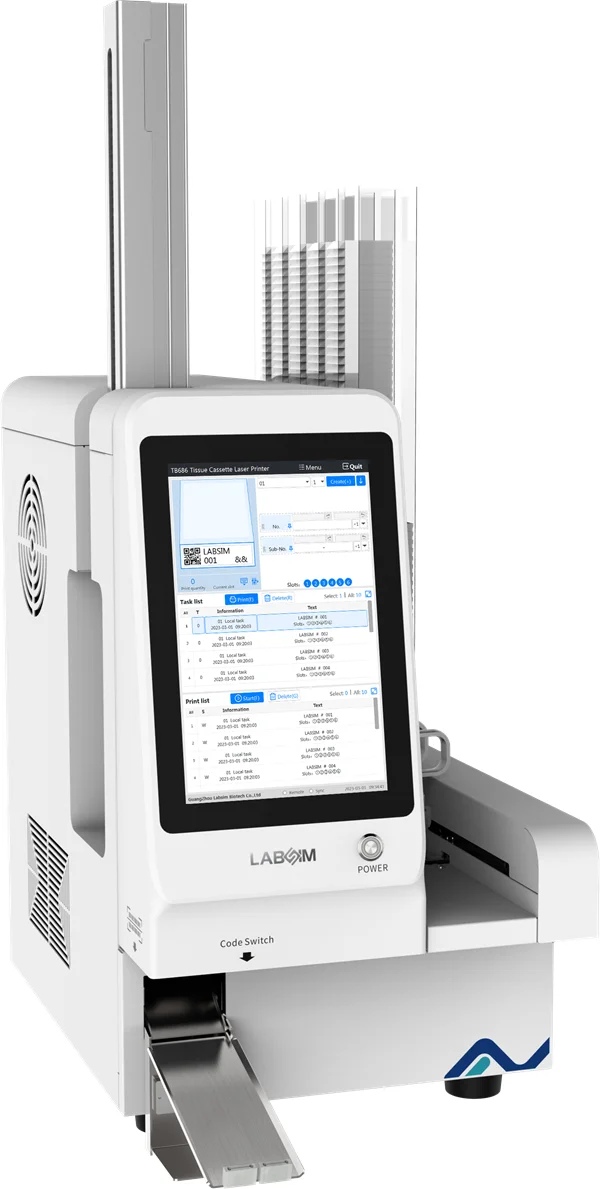
- TB406U Tissue Cassette Laser Printer features six loading slots for color-coded cassettes. Laboratories handling multiple specimen groups can consider this model for color-based organization. An optional centralized large-volume collection version provides a drawer-style sorting system, automatic output, and a removable tray for batch retrieval, with a stated capacity of at least 200 cassettes.
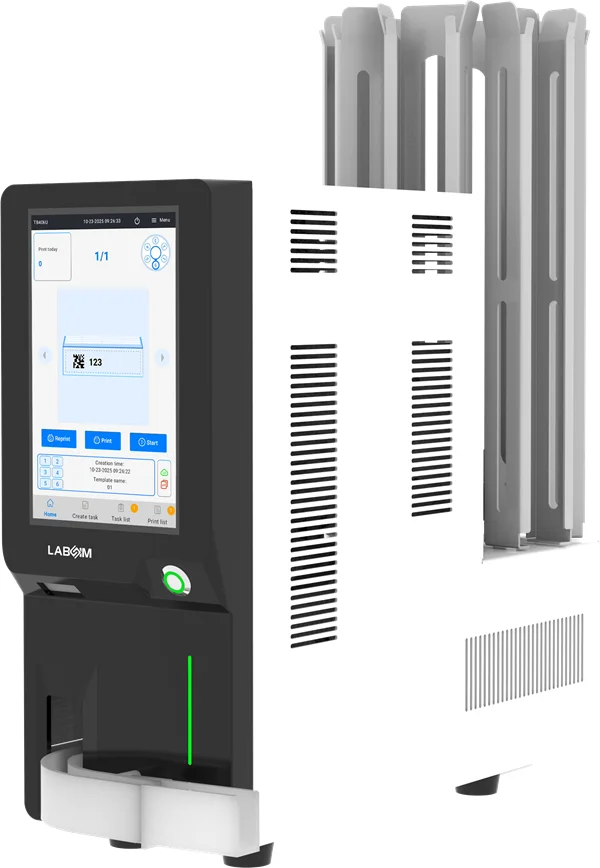
- TB406I Tissue Cassette Laser Printer also features six loading slots and supports multicolor printing to differentiate tissue samples. Its stated printing speed of 2.5 seconds per cassette makes it worth evaluating for laboratories seeking a compact printer for routine cassette identification.
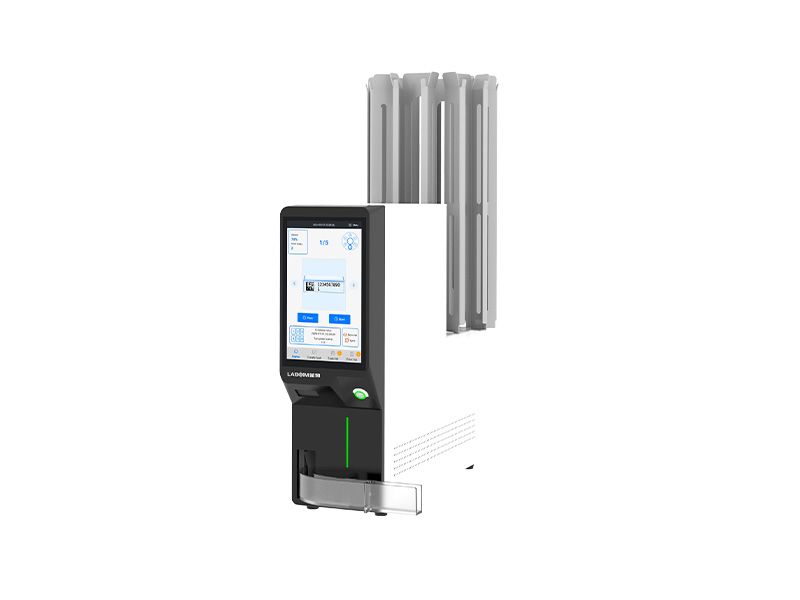
The most suitable model depends on daily cassette volume, the need to distinguish specimen groups by color, available bench space, and collection or sorting requirements. Laboratories should confirm the compatibility of their selected cassette types with the intended printer before ordering.
Coordinating Cassettes and Printers for Your Lab
By offering both tissue cassettes and cassette laser printers, LABSIM gives laboratories a single supplier to consult when evaluating consumables and printing equipment together. This can simplify product comparison and procurement planning, particularly for new laboratory setups, equipment upgrades, or efforts to standardize specimen identification across workstations.
To identify a suitable configuration, laboratories can share their current printer model, preferred cassette design, daily printing volume, color-coding requirements, and batch collection needs with LABSIM. Explore the LABSIM Tissue Cassette range and Tissue Cassette Laser Printers to compare available options, or contact LABSIM to discuss a solution aligned with your laboratory's workflow.
Frequently Asked Questions
What Types of Tissue Cassettes Are Used in Histology?
Common options include standard tissue processing cassettes, biopsy cassettes, and embedding cassettes. They may differ in perforation design, dimensions, lid configuration, and intended specimen application. Laboratories should select a type that suits their tissue samples and processing procedures.
What Is the Difference Between Laser and Thermal Tissue Cassettes?
Laser and thermal tissue cassettes are designed for different marking technologies. Laser tissue cassettes are intended for compatible laser marking systems, while thermal printing requires cassettes suitable for the relevant thermal printing method. Buyers should confirm the cassette type supported by their equipment before purchasing.
How Do I Choose the Right Tissue Cassette for My Laboratory?
Consider specimen size, perforation requirements, cassette and lid design, color-coding needs, and the identification method used in the laboratory. For automated printing, printer compatibility should also be part of the selection process. Testing representative samples can help confirm that the chosen cassette meets operational requirements.
Can I Buy Tissue Cassettes and a Laser Cassette Printer From the Same Supplier?
Yes. Sourcing both from one supplier can simplify product comparison and procurement coordination. LABSIM offers tissue cassettes and tissue cassette laser printers, allowing laboratories to evaluate consumables and equipment together. Buyers should still confirm model-specific compatibility and test the proposed combination before placing a bulk order.