

What Is a Tissue Cassette Printer?
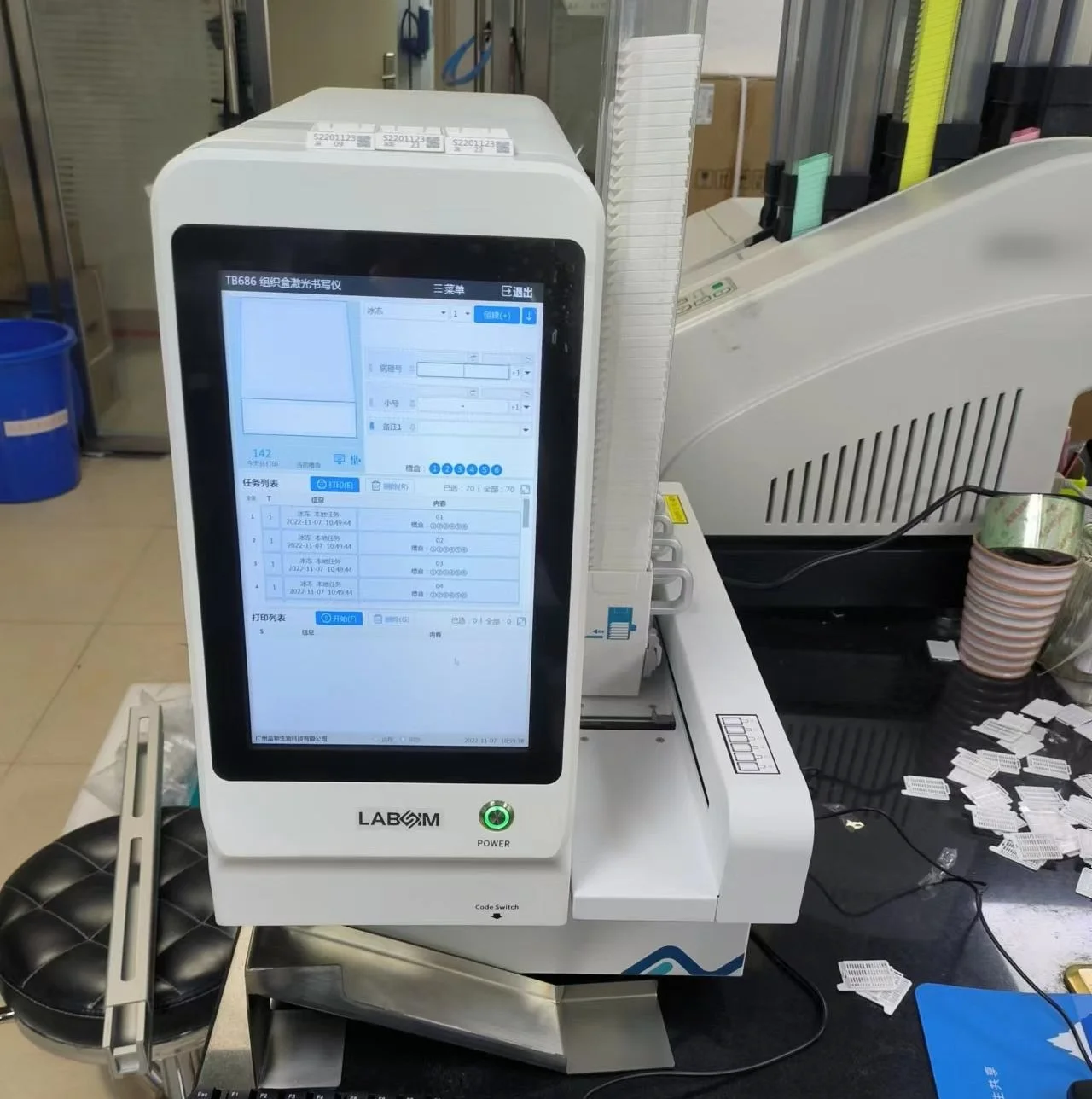
In a pathology laboratory, specimen identification must remain clear as tissue moves through multiple stages of preparation. After gross examination, tissue is placed in a cassette that accompanies the specimen through processing, embedding, and sectioning. The information attached to that cassette therefore needs to remain readable and consistent throughout the workflow. A tissue cassette printer provides a dedicated way to place specimen identification directly onto the cassette, using text, numbers, and machine-readable codes such as barcodes. Professional cassette printers are designed around the requirements of histology workflows, including durable identification and integration with laboratory information systems.
Tissue Cassette Printing in Pathology
A tissue cassette printer is a specialized laboratory device used to print identification information directly onto tissue cassettes during pathology and histology workflows. It is designed for the physical format and processing conditions associated with tissue cassettes.
The information printed on a cassette can include accession numbers, specimen identifiers, block numbers, letters, and other case-related data. Machine-readable information such as 1D or 2D barcodes can also be included, allowing the cassette to carry both human-readable and digitally scannable identification. Barcode printing can support specimen tracking throughout the histology workflow and facilitate accurate case identification during later stages.
The Cassette's Role in Tissue Processing
A tissue cassette serves as a physical carrier for specimen identification during the early and middle stages of histology. After tissue is selected for examination, it is placed into a cassette that remains associated with the specimen during subsequent processing and embedding.
The cassette helps maintain the connection between the physical tissue and its case information while the specimen undergoes laboratory preparation. Its identification can include an accession number, specimen ID, block number, or barcode, providing a consistent reference for laboratory staff throughout the handling process.
This identification becomes particularly important when multiple specimens are processed at the same time. Clear and durable cassette marking helps staff distinguish individual specimens and tissue blocks during routine handling, reducing the risk of identification errors caused by unclear handwriting, misplaced labels, or damaged markings.
The cassette also provides an important link between physical specimen handling and digital laboratory records. When barcode information is used, the cassette can be scanned and matched with data stored in systems such as a Laboratory Information System (LIS). This creates a traceable identification point that can continue to support case management as the tissue progresses toward slide preparation and diagnosis.
For this reason, the cassette is not simply a container for tissue. It is also an identification carrier that supports specimen continuity, workflow control, and traceability within the pathology laboratory.
How Tissue Cassette Printing Works
A tissue cassette printer converts specimen information from the laboratory system into a physical identification mark on the cassette. The process typically begins when case data, such as an accession number, specimen ID, block number, or barcode, is sent to the printer through laboratory software or entered using an integrated workstation.
The printer formats this information according to a predefined template. Text, numbers, and machine-readable codes can be arranged to fit the available printing area while keeping the information clear for both laboratory staff and barcode scanners. Templates can also be configured for different specimen types or laboratory requirements.
The cassette is then positioned inside the printer, where the selected printing technology creates the identification directly on its surface. Depending on the equipment, this may involve laser marking, inkjet printing, or thermal transfer. The goal is to produce a clear and durable mark that remains associated with the specimen during subsequent laboratory handling.
After printing, the identified cassette can continue through tissue preparation and embedding. Because the identification is placed directly on the cassette, there is no separate adhesive label that needs to remain attached during routine handling.
In automated pathology environments, cassette printing can also be connected with laboratory information systems and other workflow software. This allows identification data to move from the digital case record to the physical cassette, creating a more consistent connection between electronic information and the specimen itself.
Key Benefits for Laboratory Workflow
A tissue cassette printer supports more than basic specimen identification. By standardizing how information is placed on cassettes, it can improve consistency across routine histology operations.
Consistent identification
Automated printing creates standardized text, numbers, and barcode formats across batches of specimens. This gives laboratory staff a clear and uniform identification reference during specimen handling and processing.
Durable marking
Tissue cassettes are exposed to chemicals and physical handling during laboratory preparation. Printing directly onto the cassette can provide identification that remains readable throughout these conditions, helping preserve the connection between the specimen and its case information.
Faster batch processing
Automated cassette printing can handle identification data more efficiently than manual writing or individual label preparation. This becomes particularly useful in laboratories processing large numbers of specimens, where repetitive identification tasks can consume considerable staff time.
Barcode-based traceability
Barcodes allow cassette information to be scanned and matched with digital case records. When integrated with laboratory information systems, this can support more reliable tracking of specimens and tissue blocks across different stages of the pathology workflow.
Together, these benefits make cassette printing an important component of a standardized pathology identification process. Its value becomes even greater when cassette identification is connected with the broader traceability chain from specimen to diagnostic slide.
From Cassette Identification to Traceability
Cassette identification becomes more valuable when it forms part of a connected traceability system. In a modern pathology laboratory, specimen information may need to remain associated with the case across multiple physical and digital records, from the original specimen through tissue processing, block preparation, slide preparation, diagnosis, and archiving.
A printed cassette provides an early physical identification point within this chain. When the cassette carries a unique case identifier or barcode, the information can be scanned and matched with records stored in a Laboratory Information System (LIS) or other laboratory management platform. This creates a link between the physical tissue and its corresponding digital record.
The same identification logic can continue when tissue is converted into paraffin blocks and diagnostic slides. Consistent identifiers help laboratory personnel connect related materials to the same case, while barcode-based workflows can reduce repetitive manual data entry and support more reliable information transfer.
For laboratories pursuing digital traceability, cassette printing can also work alongside slide printing and other identification technologies. Instead of treating each labeling task as an isolated operation, the laboratory can establish a connected identification chain across different specimen formats.
This approach is particularly relevant to high-volume pathology laboratories, where large numbers of specimens, blocks, and slides must be managed simultaneously. A standardized identification system provides the foundation for linking physical materials with digital case information and creating greater visibility across the pathology workflow.
Why Choose Labsim Tissue Cassette Printers
Labsim develops pathology printing solutions designed around specimen identification, barcode management, and laboratory traceability. Its tissue cassette printer portfolio covers different printing technologies and workflow requirements, allowing laboratories to select equipment according to throughput, space, automation, and system integration needs.
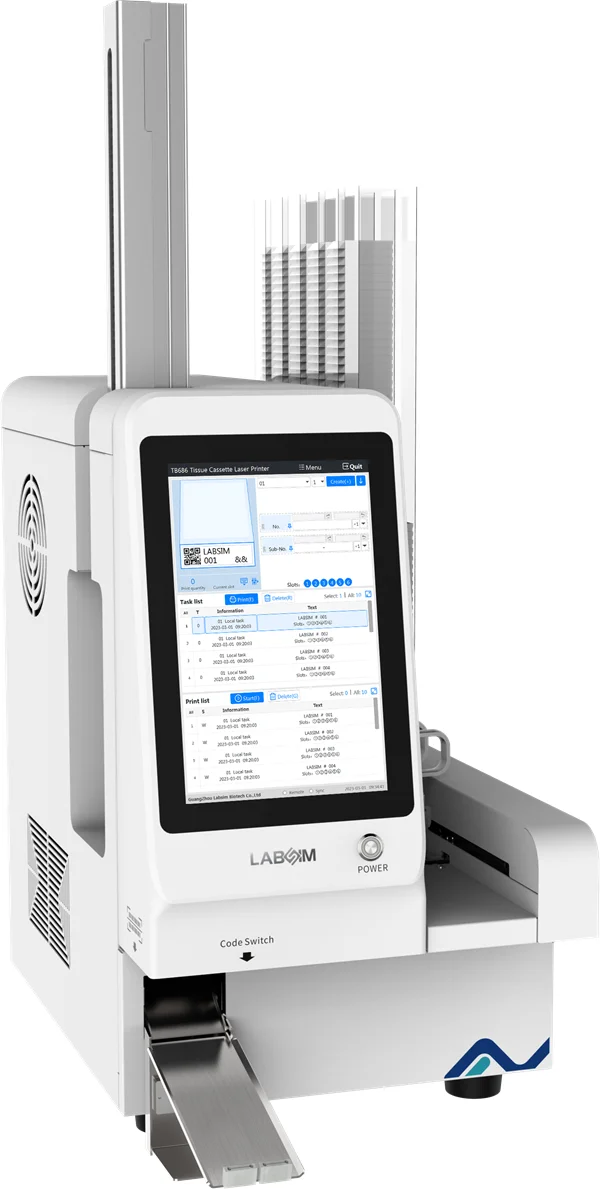
The TB686 Tissue Cassette Laser Printer uses UV laser technology for non-contact printing and can print characters, symbols, and barcodes at up to 2500 dpi. It also supports LIS, HIS, PIS, and PACS connectivity, making it suitable for laboratories that require integrated identification and batch processing.
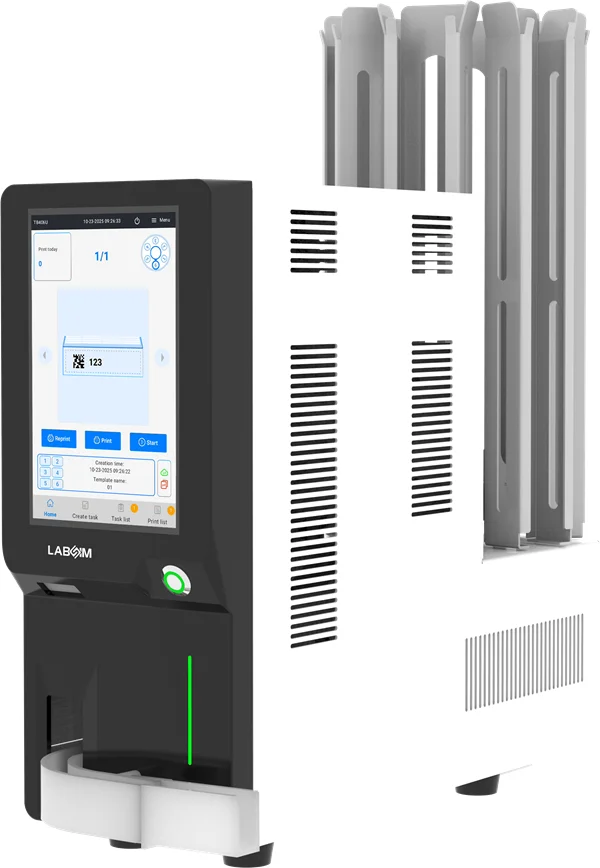
For laboratories looking for a more compact solution, the TB406U Tissue Cassette Laser Printer provides built-in barcode scanning, editable multi-template printing, and multiple connectivity options for laboratory information systems. Its six-slot loading design supports batch cassette handling while maintaining a relatively compact footprint.
Across the portfolio, Labsim focuses on clear, durable identification and automated printing that can reduce manual labeling work. Its pathology printing solutions can also connect cassette identification with broader digital traceability, helping laboratories establish a consistent link between physical specimens and electronic case information.
Conclusion
A tissue cassette printer is a specialized pathology device that places standardized identification directly onto tissue cassettes. Its role extends from basic specimen identification to barcode-based tracking and digital traceability. For laboratories handling increasing specimen volumes, integrating cassette printing with laboratory information systems can create a more consistent connection between physical specimens and digital case records.
Labsim provides tissue cassette printing solutions designed to support automated identification, barcode printing, and pathology workflow integration. Explore Labsim's pathology printing solutions to find a cassette printing system suited to your laboratory workflow.
Frequently Asked Questions
What is a tissue cassette printer used for?
A tissue cassette printer is used to print specimen identification directly onto tissue cassettes. It can print information such as accession numbers, specimen IDs, block numbers, and barcodes for standardized identification and traceability.
What information can be printed on a tissue cassette?
Depending on the laboratory's requirements and printer capabilities, a cassette can carry text, numbers, symbols, 1D barcodes, or 2D codes. The information is typically linked to the corresponding specimen or case record.
Can a tissue cassette printer connect to LIS?
Yes. Many professional cassette printers support integration with Laboratory Information Systems and other laboratory platforms. This allows case information to be transferred from digital records to the physical cassette and can support barcode-based tracking.
What is the difference between a tissue cassette printer and a slide printer?
A tissue cassette printer identifies tissue cassettes used during tissue processing and embedding, while a slide printer marks microscope slides used for subsequent examination. Both can form part of an integrated pathology identification and traceability workflow.
How does a tissue cassette printer improve laboratory efficiency?
Automated cassette printing reduces repetitive manual identification work and provides standardized text and barcode printing. It can also support batch processing, helping laboratories manage larger specimen volumes with greater consistency.
What should laboratories consider when choosing a tissue cassette printer?
Important considerations include printing technology, marking durability, barcode capability, printing speed, cassette capacity, template flexibility, software compatibility, and integration with LIS or other laboratory systems. The appropriate configuration depends on the laboratory's specimen volume and workflow requirements.